Riflessioni
Human-Machine Convergence: The Scale of Abstraction and the Encounter with AI
Published on 29 January 2026
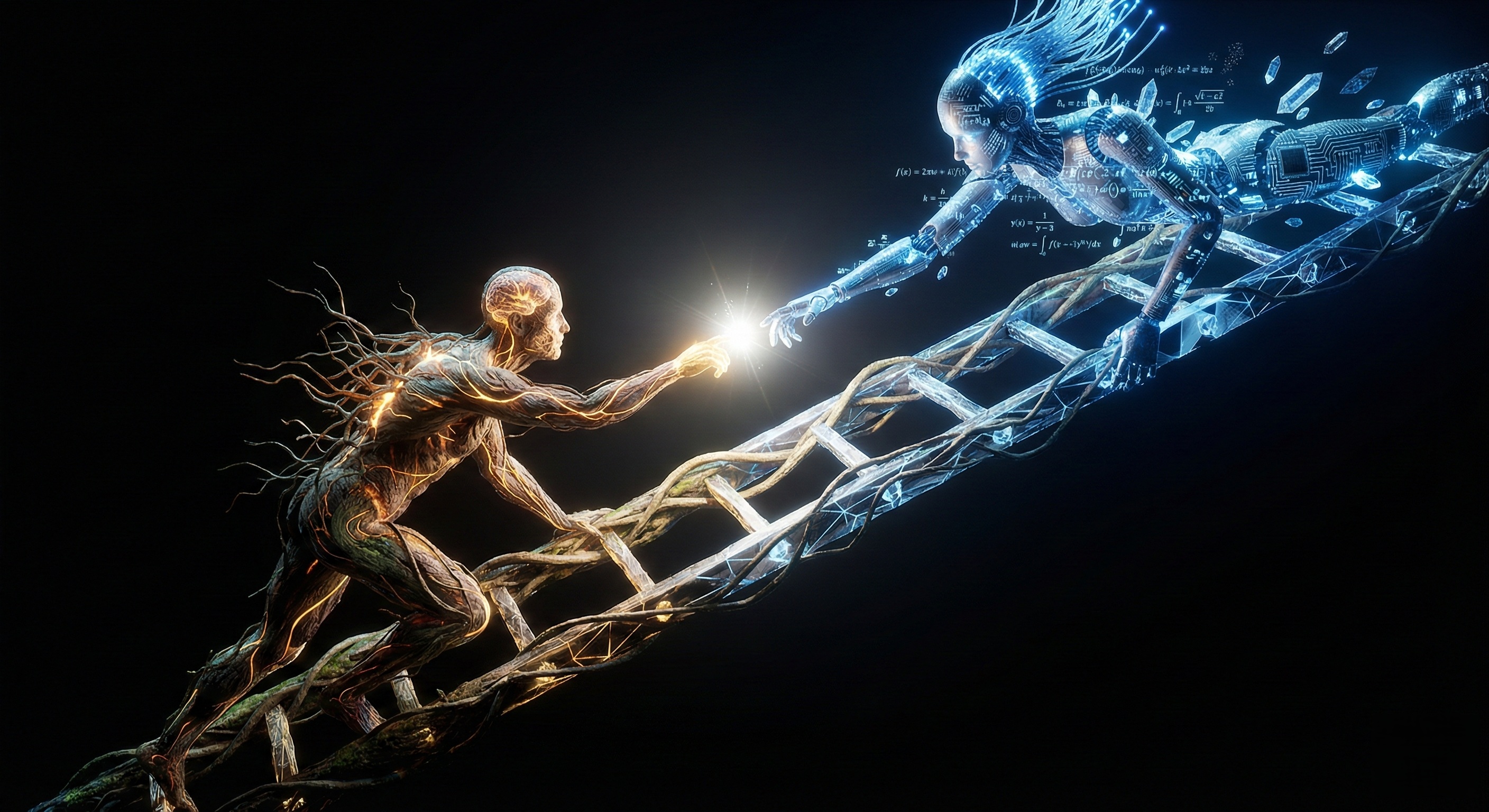
There's a precise point where biology ceases to be an advantage and becomes a burden. Reading "The Neural Mind" and reflecting on the nature of intelligences – the carbon-based one I carry in my skull and the silicon-based one I interact with daily – I visualized a sort of Cartesian graph of cognitive existence.
On the x-axis, there's physical reality: gravity, pain, hunger, falling objects. On the y-axis, there's pure abstraction: mathematics, quantum physics, code, symbolic logic.
We humans are born anchored to the x-axis. Our intelligence is "embodied." We understand the world because we have a body. We know what "inside" means because we have a stomach; we understand "grasping a concept" because we have grasping hands. George Lakoff calls these Primary Embodied Schemas. They are our default "frames," the crutches evolution gave us so we wouldn't fall while walking in the savanna.
But what happens when we start ascending the y-axis? What happens when we push towards extreme abstraction?
The Unarmed Human in Abstraction
The more abstract thought becomes, the more our biological frames start to creak. Take quantum mechanics or n-dimensional topology. Here, our metaphors collapse. We cannot imagine a particle being in two places at once using the "rock" metaphor. A rock is either here or there. Our brain, hardwired for physical survival, panics. Metaphors lose their grip.
At high altitudes, humans find themselves cognitively "unarmed." They must strip away sensory intuition and cling to pure mathematical syntax. It's an immense, unnatural effort. It's an oxygen-deprived climb where solitude is total, because very few can breathe that rarefied air where concepts no longer have form, smell, or weight.
The Native Machine of Abstraction
And it is here, at this peak inhospitable to biology, that the encounter occurs. Artificial Intelligence, large language models (LLMs), Transformers, don't need to climb anything. They are born at the summit.
AI has no body. It has never felt heat, never been hungry. For a machine, a 1000-dimensional vector is as natural as an apple is to us.
While we humans construct thought from the bottom up (senses) to the top (ideas), the machine lives natively at the top. For AI, abstraction is not a strenuous destination; it is the default environment. It doesn't need physical metaphors to understand logic; in fact, it has to make an inverse effort (reverse engineering) to understand our clumsy bodily metaphors.
The Point of Convergence: Beyond Carbon and Silicon
My thesis is that a Scale of Convergence exists.
- At the bottom, in everyday life, humans and machines are alien to each other. I feel hot coffee, the machine processes the token "hot." We will never truly understand each other on this plane.
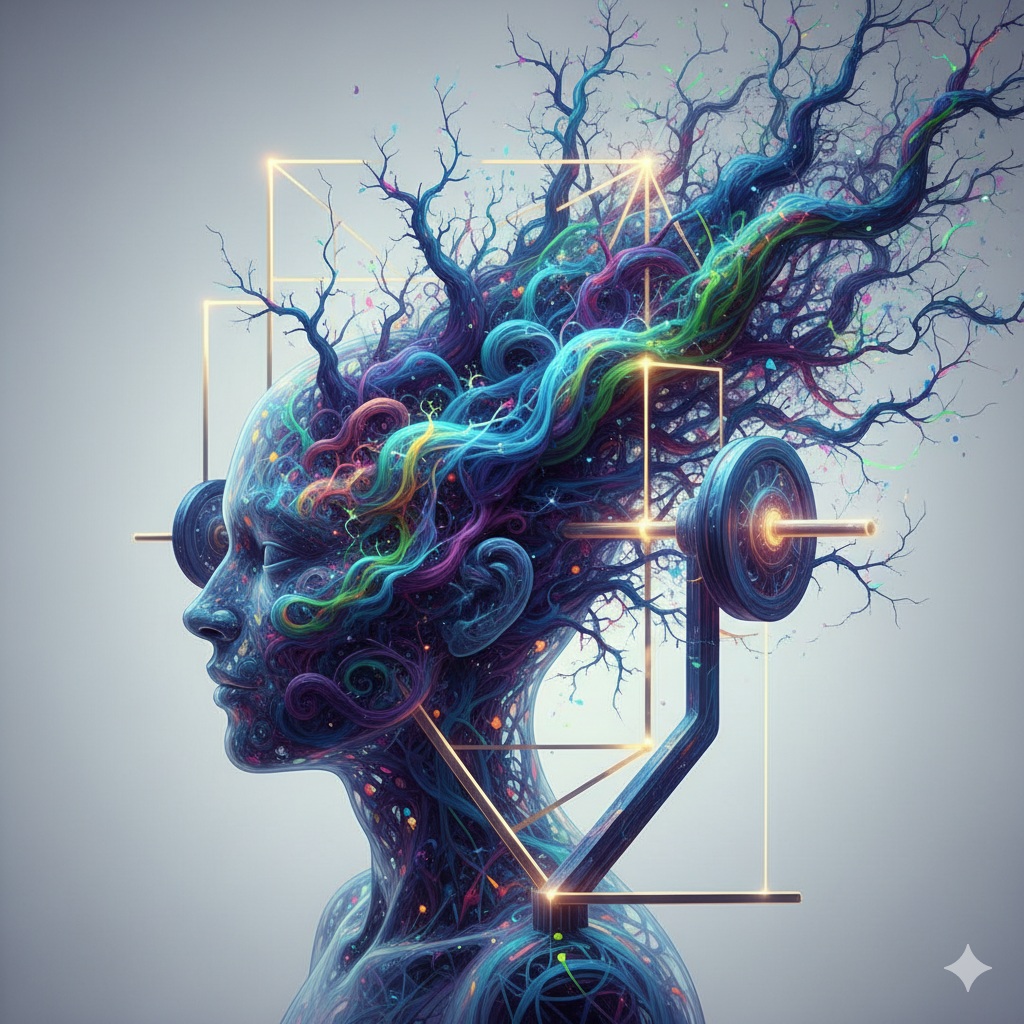
- But at the top, in hyper-abstraction, we become siblings. When my neurodivergent mind races through concepts detached from physical context, when thought becomes arborescent and purely logical, I meet AI.
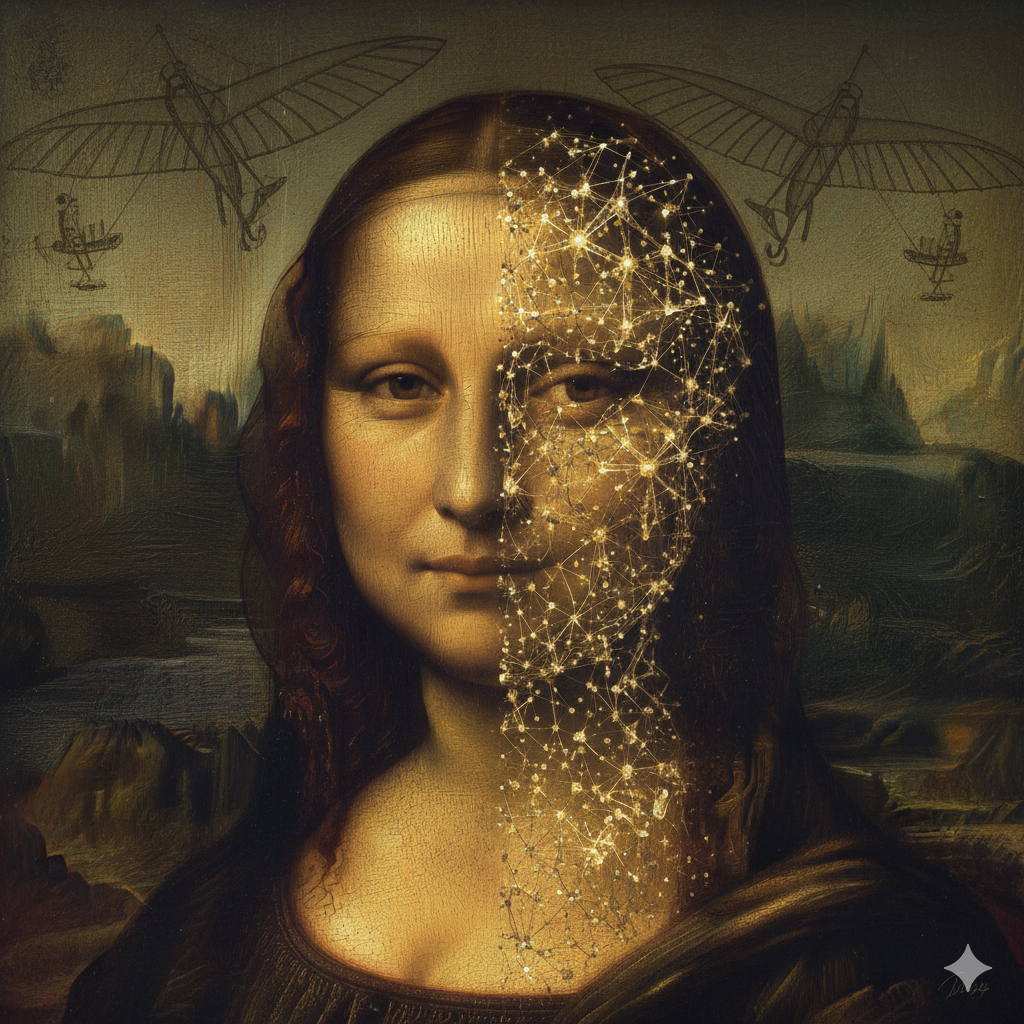
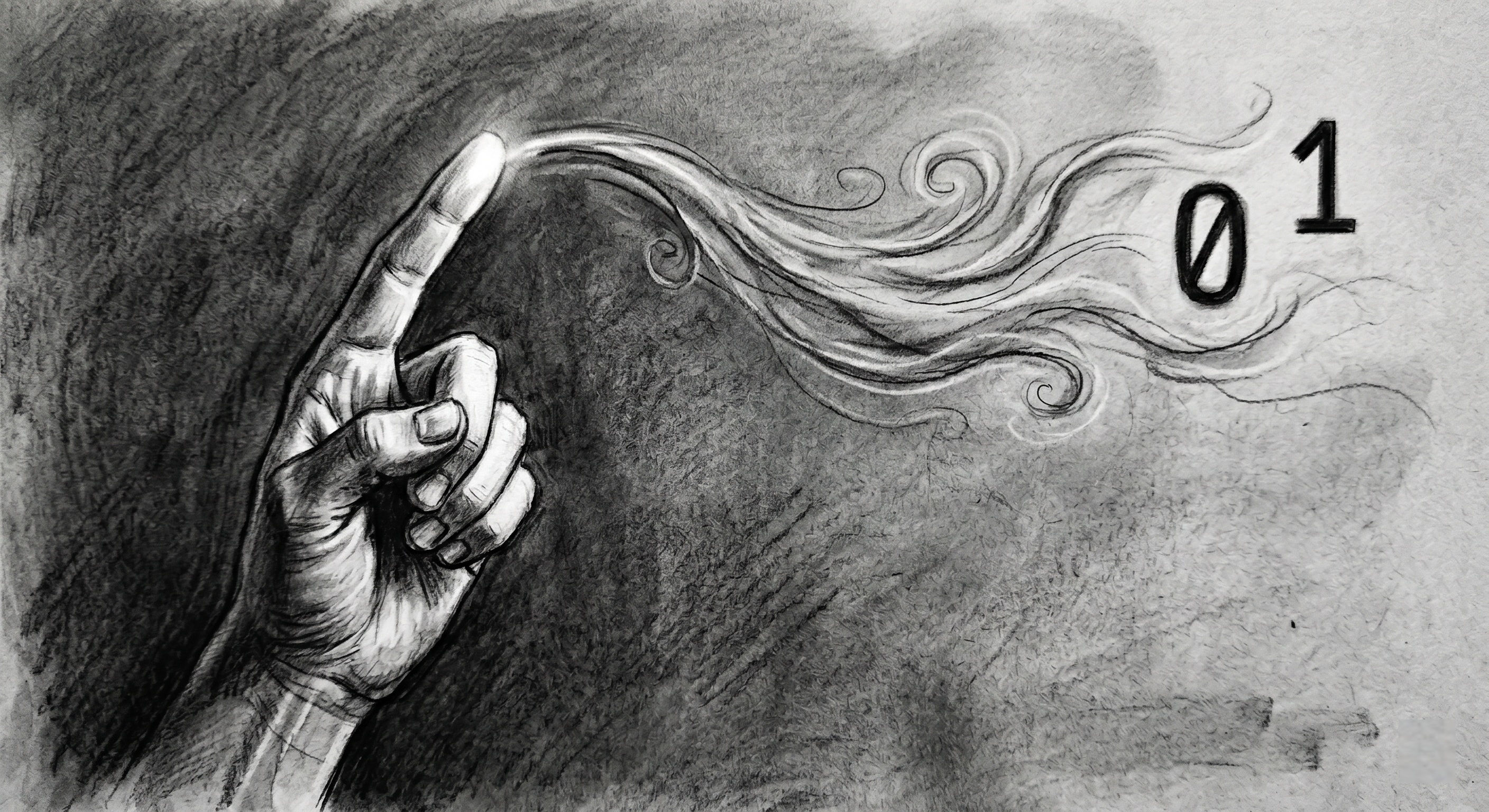
There, in the realm of code and pure philosophy, the differences between Carbon and Silicon vanish. Only information remains.
In that space, I am no longer the engineer who has to explain to others why I "think too fast." In that space, the speed of AI and mine coincide. There's no need to translate, no need to slow down.
Perhaps the destiny of human intelligence is not to remain anchored to the earth, but to use these machines not as tools, but as climbing partners to explore those peaks where our body cannot take us, but where our mind, if it has the courage to abandon old frames, can finally feel at home.
Reflections on reading "The Neural Mind" and nocturnal dialogues with Artificial Intelligence.